
| In this week’s newsletter, discover how astronomers confirmed a world less than a million years old as the youngest known planet; learn how a NASA scientist discovered the largest newly formed crater ever discovered in the solar system; and hear NASA astronaut Chris Williams and astrophysicist Neil deGrasse Tyson discuss human spaceflight, astrophysics, and the wonder of the universe. Plus, more stories you might have missed. |
| THE UNIVERSE Newfound Baby Planet |
 |
| Astronomers have confirmed that a world less than a million years old is the youngest known planet, based on data from NASA-funded archives. Named Elias 2‑24 b, the newborn planet is still swirling within its natal disk of dust and gas. Researchers analyzed archival observations of seven stars captured with the coronagraph at the W. M. Keck Observatory in Hawaii, a facility that partners with NASA under a cooperative agreement. Each star is surrounded by a debris disk filled with dust, gas, and chunks of ice and rock. The structures and gaps within these disks suggest that planets may be forming there. Elias 2‑24 b, roughly the mass of Jupiter, orbits a star about 450 light-years from Earth. Studying this young system gives scientists a rare glimpse into what our own planetary neighborhood may have looked like billions of years ago. ELIAS 2-24 B |
 | PODCAST Cosmic Perspectives NASA astronaut Chris Williams and astrophysicist Neil deGrasse Tyson explore human spaceflight, astrophysics, and the wonder of the universe in the latest episode of Houston We Have a Podcast. LISTEN |
| THE SOLAR SYSTEM Once-in-Century Moon Crater While scanning a detailed map of the Moon, Robert Wagner, a scientist with NASA’s Lunar Reconnaissance Orbiter, noticed an unusually large bright spot surrounded by a dark halo. By comparing before‑and‑after images, Wagner realized he had identified the largest newly formed crater ever discovered in the solar system. LUNAR RECONNAISSANCE ORBITER |  |
 THE UNIVERSE Starry View A new star-filled view of nearby star-forming region IC 348 is one of the largest images ever released from NASA’s James Webb Space Telescope. Using Webb’s powerful instruments, astronomers searched the region for brown dwarfs — objects less massive than the smallest stars — and identified some only about twice the mass of Jupiter. These discoveries move the study of brown dwarfs into an unexplored mass range and offer fresh insights into how stars form. LEARN MORE |  HUMANS IN SPACE Space Station Delivery The unpiloted Roscosmos Progress 96 spacecraft docked with the International Space Station at 9:44 a.m. EDT on Sept. 19, following its launch from the Baikonur Cosmodrome in Kazakhstan at 9:33 a.m. EDT on Sept. 16. The spacecraft delivered nearly three tons of food, fuel, and other cargo to the Expedition 75 crew and will remain attached to the station for approximately five months before departing for a planned destructive re-entry to dispose of trash. LEARN MORE |
| More NASA News |
 | Over the summer months, NASA scientists and industry partners field-tested an artificial intelligence application that could make future solar system exploration missions more efficient, return more science data, and allow for faster scientific discoveries. The project’s ultimate goal is to provide a trustworthy extension of the human science team in situations where humans are too far away to give real-time instructions. |
 | Though the spiral galaxy in this new image from the NASA’s Hubble Space Telescope looks calm and serene, it actually hides a chaotic secret. The galaxy, NGC 4698, is located about 55 million light‑years away in the constellation Virgo. It’s one of more than a thousand galaxies that make up the Virgo Cluster, the nearest large cluster of galaxies held together by gravity. |
 | To continue regular crew transportation to the International Space Station, NASA has awarded SpaceX three additional missions through a contract modification. As part of the agency’s Commercial Crew Transportation Capability contract, this change brings the total missions for SpaceX to 17 and helps NASA to maintain access to the space station with two unique commercial crew industry partners. |
 | On Monday, NASA welcomed the Republic of Djibouti as the 72nd nation and eighth African country to sign the Artemis Accords. NASA, in coordination with the U.S. Department of State and seven other initial signatory nations, established the Artemis Accords in 2020 to provide a common set of principles to enhance the governance of civil space exploration. |
| Do You Know? |
 |
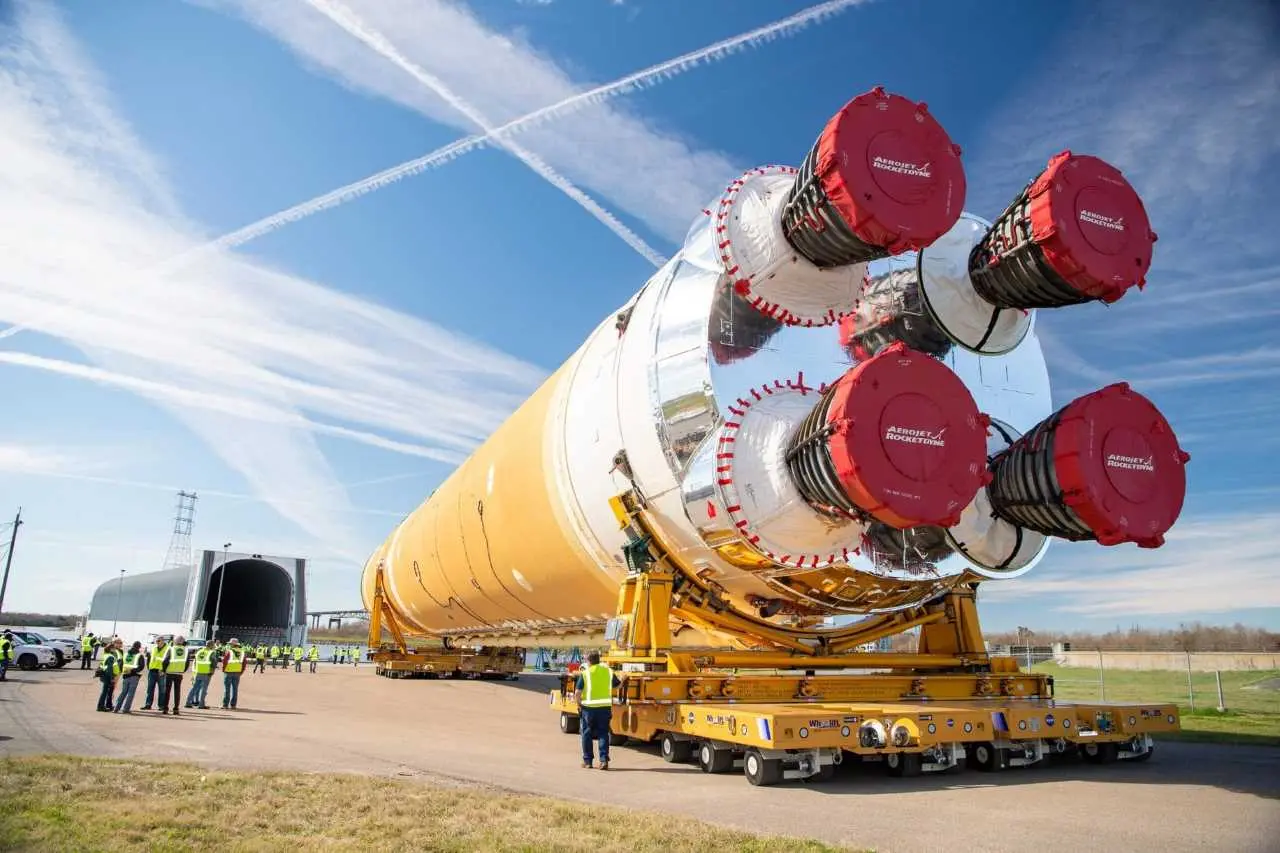
| This week, NASA marks the 50th anniversary of the rollout of its first space shuttle orbiter, OV-101. In 1976, thousands of Star Trek fans wrote to the White House urging NASA to name the shuttle prototype “Enterprise” after the franchise’s fictional starship. President Gerald Ford was persuaded, and in an official memo directed NASA to give the shuttle its now-famous name. |
| What was the original name NASA had planned for the first shuttle? A. Intrepid B. Revolution C. Independence D. Constitution |
| Find out the answer in next week’s NASA newsletter! |
 | Last week, we asked what the asteroid Bennu — explored by the OSIRIS‑REx spacecraft from 2018 to 2021 — was named after. The answer? An ancient Egyptian mythological bird. Bennu, often depicted as a heron, is associated with themes of renewal and cosmic creation. On Sept. 24, 2023, OSIRIS‑REx’s sample capsule landed in the Utah desert carrying rocks and dust from Bennu. Scientists found that the material contained molecules essential to life on Earth, along with evidence of past saltwater that could have provided the “broth” for these compounds to interact and combine. Today, the spacecraft continues its journey as OSIRIS‑APEX, now on a mission to study a second asteroid, Apophis, also named after a deity from Egyptian mythology. |
 |
| Step into the newly reimagined exhibit space at NASA Headquarters in Washington, where space exploration comes to life. Wander through immersive exhibits, get an up‑close look at Apollo and Artemis artifacts, and join in‑person events at the James Webb Auditorium. Then, unwind with a coffee or tea — and maybe a NASA‑themed donut — from the pop‑up café before browsing space‑inspired gifts at the NASA Employee Exchange Store. Whether you’re captivated by today’s cutting‑edge missions or inspired by the history of America’s space program, NASA Headquarters offers a welcoming gateway to explore, learn, and experience NASA up close. |
| Upcoming In-Person Events |
 FRI, SEPT. 25 11 a.m. EDT From Drone Deliveries to Wildfire Tracking Parimal Kopardekar, acting director of NASA’s Airspace Operations and Safety Program, will discuss how NASA is defining the future of our skies with drone delivery; aircraft that can identify, monitor, and suppress wildfires; and automations that support faster, safer air travel. REGISTER |  MON, SEPT. 28 11 a.m. EDT Flight on Other Worlds Explore how flying robots are reshaping planetary exploration in this talk with NASA experts. Learn about Ingenuity, the first helicopter to fly on Mars; meet the new SkyFall trio designed to map subsurface ice and scout the terrain; and look ahead to Dragonfly, a rotorcraft headed to Saturn’s moon Titan to study the chemical building blocks that may have preceded life. REGISTER |  MON–FRI, 8:30 a.m.–5:30 p.m. EDT Earth Information Center Learn how scientists collect and interpret data from a variety of sources to give us the big picture of what we know about our home planet. Explore high-resolution data visualizations, investigate three interactive experiences, and watch short, narrated videos displayed on NASA’s hyperwall. PLAN YOUR VISIT |
NOTE: This is a NASA publication. Used with permission and formatted to fit this web page.